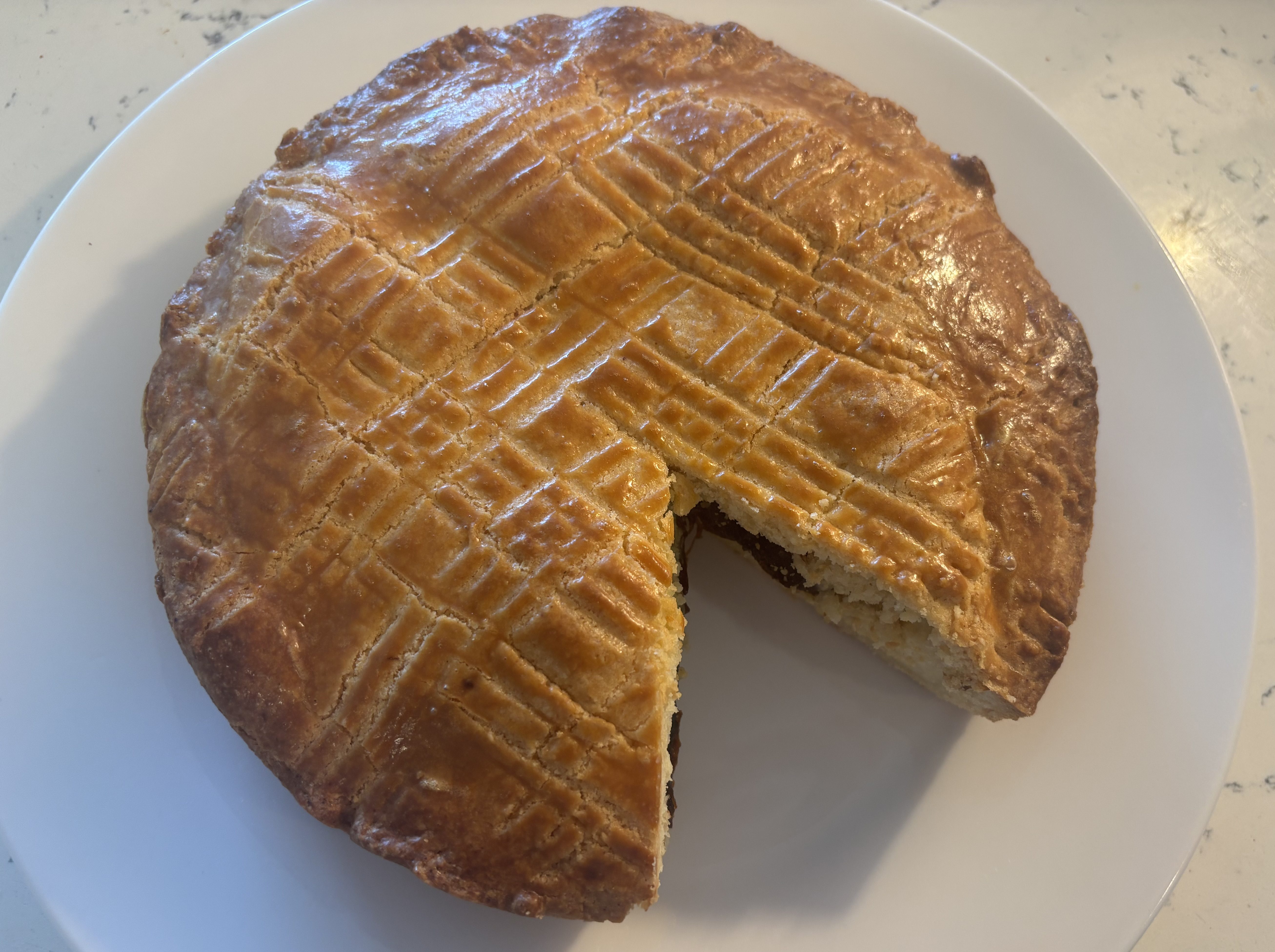
If you are looking for a satisfying, classic pastry project to master, this traditional Gâteau Basque is an incredible baking ritual to bring into your kitchen. Hailing from the historic Basque region, this rustic cake features a thick, rich, almond-flecked cookie dough wrapped around a luscious core of vanilla pastry cream and sweet dark cherries. Baking it brings out a wonderful dual texture: beautifully crisp and golden on the outside, yet deeply moist and tender on the inside. It is an exceptionally comforting treat that looks striking when sliced, making it perfect for a slow weekend dessert or a thoughtful handmade gift for friends.
Jump to Recipe
Classic Gâteau Basque
Course: FrenchCuisine: DessertDifficulty: IntermediateServings
4-6
servingsPrep time
50
minutesCooking time
45
minutesCalories
350
kcalIngredients
- For the Rich Cookie Dough (Pâte Basque):
Unsalted butter: 100g (Bring to room temperature)
Fine granulated sugar: 100g
Fine sea salt (or any fine salt): 0.5g
Whole egg: 60g (Approx. 1 large egg, bring to room temperature)
Dark rum (such as Negrita Rum): 5g
Cake flour: 110g
Bread flour: 55g
Almond flour (almond poudre): 60g
Baking powder: 2.2g
- For the Pastry Cream (Crème Pâtissière):
Unsweetened Almond Milk: 200g
Vanilla bean (Madagascar preferred): 1/5 of a pod
Fine granulated sugar: 35g
Egg yolks: 40g (Approx. 2 large egg yolks)
Cake flour: 15g (Sifted)
Unsalted butter: 15g
- For the Filling & Finish:
Canned or jarred dark sweet cherries: Approx. 12 berries
Egg yolk (for the egg wash finish): As needed
Directions
- Prep Work
- Ensure your cookie dough butter and whole egg are completely at room temperature before starting.
- Sift the dough’s dry ingredients together into a single bowl: cake flour, bread flour, almond flour, and baking powder.
- Sift the cake flour for the pastry cream.
- Prepare to preheat your oven to 160°C (320°F) right before assembling the final cakes.
- The Cookie Dough Base
- Place the room-temperature butter, 100g of granulated sugar, and salt into a medium mixing bowl. Mix together with a rubber spatula until smooth and uniform. Whisk your whole egg in a small cup, then add it to the butter a little bit at a time, blending thoroughly after each addition.
- Fold and Chill
- Add the sifted flour and almond mixture directly to the creamed butter. Fold gently using a cutting motion with your spatula. Just as the dough begins to clump together, pour in the 5g of dark rum and mix briefly until a single dough forms. Place the dough between two sheets of parchment paper or plastic film, use 5mm acrylic rolling rulers as a guide, and roll the dough out flat. Place the sheet into the freezer until it is cold and firm. (Note: Ensure it is rolled wide enough to cut out two 15cm rounds and two 12cm rounds).
- Stovetop Pastry Cream
- Slice open your vanilla bean fragment and scrape out the seeds. Place both the milk and the vanilla bean (pod and seeds) into a small saucepan over medium heat. In a separate bowl, whisk your egg yolks and 35g of granulated sugar together until pale and slightly thick, then whisk in the 15g of sifted cake flour until smooth.
- Cook Until Thick
- Just as the milk is about to boil, remove it from the heat and slowly stream it into the egg yolk bowl while whisking continuously. Pour the mixture back into the saucepan through a fine-mesh strainer to catch any lumps or the vanilla pod. Return to the heat and cook, stirring vigorously and constantly, until the mixture thickens into a glossy, boiling pastry cream. Remove from heat, stir in the 15g of butter until melted, spread the cream across a shallow tray, cover directly with plastic wrap, and plunge the tray into ice water to cool rapidly.
- Lining the Rings
- Retrieve your firm, frozen dough sheet. Use a 15cm ring to cut out 2 rounds, and a 12cm ring to cut out 2 rounds. Gently ease the larger 15cm rounds down into the bottoms and up the sides of two 12cm tart rings.
- Layer the Filling
- Whisk your chilled pastry cream briefly to smooth it out. Divide the cream evenly between the two lined tart rings (roughly 120g of cream per cake) and smooth the surfaces. Press about 6 dark cherries into the cream of each cake, embedding them slightly.
- Enclose and Chill
- Place the remaining 12cm cookie dough rounds on top of the pastry cream to act as lids. Press the edges down gently but firmly to seal the top and bottom dough layers together. Place the cakes into the refrigerator to chill and firm up completely.
- The Signature Basque Design
- Once the cakes are thoroughly cold and solid, lift off the outer 12cm tart rings. Brush the top surfaces smoothly with egg yolk wash, then use the tines of a fork to lightly score a traditional cross-hatch or lattice pattern into the glaze. Slip a 12cm pastry circle/ring back around the outside of each cake to prevent them from spreading or losing their shape in the heat, and prick the top surfaces 2 or 3 times with a toothpick to let steam escape.
- Bake to a Deep Gold
- Place the rings on a baking sheet lined with a silicone mesh baking mat (such as a Silpan). Bake in your preheated oven at 160°C (320°F) for approximately 45 minutes. Once the tops have taken on a gorgeous, rich, deep golden-brown color, remove them from the oven. Transfer the rings to a wire cooling rack and allow the cakes to cool to room temperature before removing the outer rings and serving.
Notes
- Why the Double Rings Matter: Gâteau Basque dough has a very high butter and sugar ratio, which gives it that incredible melt-in-your-mouth texture. However, this means it wants to melt and puddle in a hot oven. Keeping the metal 12cm rings snugly around the cakes during baking acts as a corset, forcing the dough to rise straight up into a gorgeous, professional bakery profile.
The Maturity Secret: While the smell of this baking cake will make it hard to resist, Gâteau Basque actually tastes significantly better if you wrap it up and let it rest at room temperature or in the fridge for a full day before slicing. The moisture from the custard deepens the internal crumb while the dark rum matures beautifully.
Working with Cold Dough: If your kitchen is warm, the cookie dough can turn soft and sticky very quickly. Don’t be afraid to keep popping the dough back into the freezer for 3 to 5 minutes whenever it feels too flimsy to handle. Working with firm, frozen disks makes pressing it into the rings incredibly easy.

Leave a Reply