Growing up, a part of me felt a profound sense of appreciation toward my parents. Despite their strictness, they allowed me to pursue the things I wanted to do, and I always recognized that my mother carried an immense, silent struggle to raise us. When I was in elementary school, I began to notice a specific dynamic: a part of my mom deeply wanted me to accomplish everything she couldn’t do when she was young. At that age, it didn’t matter much what I actually wanted; I simply did my absolute best to live up to her expectations. Whenever I couldn’t, I felt a crushing sense of self-disappointment. It is entirely natural for a parent to want their children to succeed where they couldn’t, but as a child, carrying the weight of someone else’s unfulfilled dreams is a heavy burden.
Some people might find distinct role models within their families, a mother, a father, a grandparent, or look entirely outside of them. For me, finding a traditional role model was difficult. My dad was always consumed by his work, and though I often wish I could have seen with my own eyes just how hard he was labouring every day, watching his quiet endurance from a distance taught me a vital lesson about resilience. From my mom, I learned something entirely different; I learned how to bring color into life.
It might sound paradoxical because she was an incredibly difficult and hyper-serious person, both with herself and with me, but beneath that rigid exterior, her underlying passion for design, clothing, and drawing never truly faded. Inadvertently, it became a part of me. My love for creativity, the joy of constructing clothing, figuring out unique color palettes, and appreciating independent, non-trendy designs, is a direct inheritance from her.
I think she struggled deeply to understand her own internal storms. Our parents age alongside us, and as they grow older, they go through intense internal physical changes and hormonal shifts that heavily dictate and affect their behavior. I understand that biological reality now, and I have empathy for it. Yet, this is exactly why I believe it is so crucial to face our internal difficulties much earlier in life.
As anyone gets old, everyone finds things more difficult, our physical energy drops, our mental flexibility shifts, and the same is true for our emotions. If we do not actively work on our patterns and try to figure things out much earlier in our lives, the emotional work only gets tougher as the years stack up. It makes the later job of living so much easier if we choose to confront our storms while we have the bandwidth to evolve. It would have been so much better for her if she could have simply admitted she was facing a difficult time, rather than constantly judging herself with such harsh severity and letting those unexamined struggles harden with age.
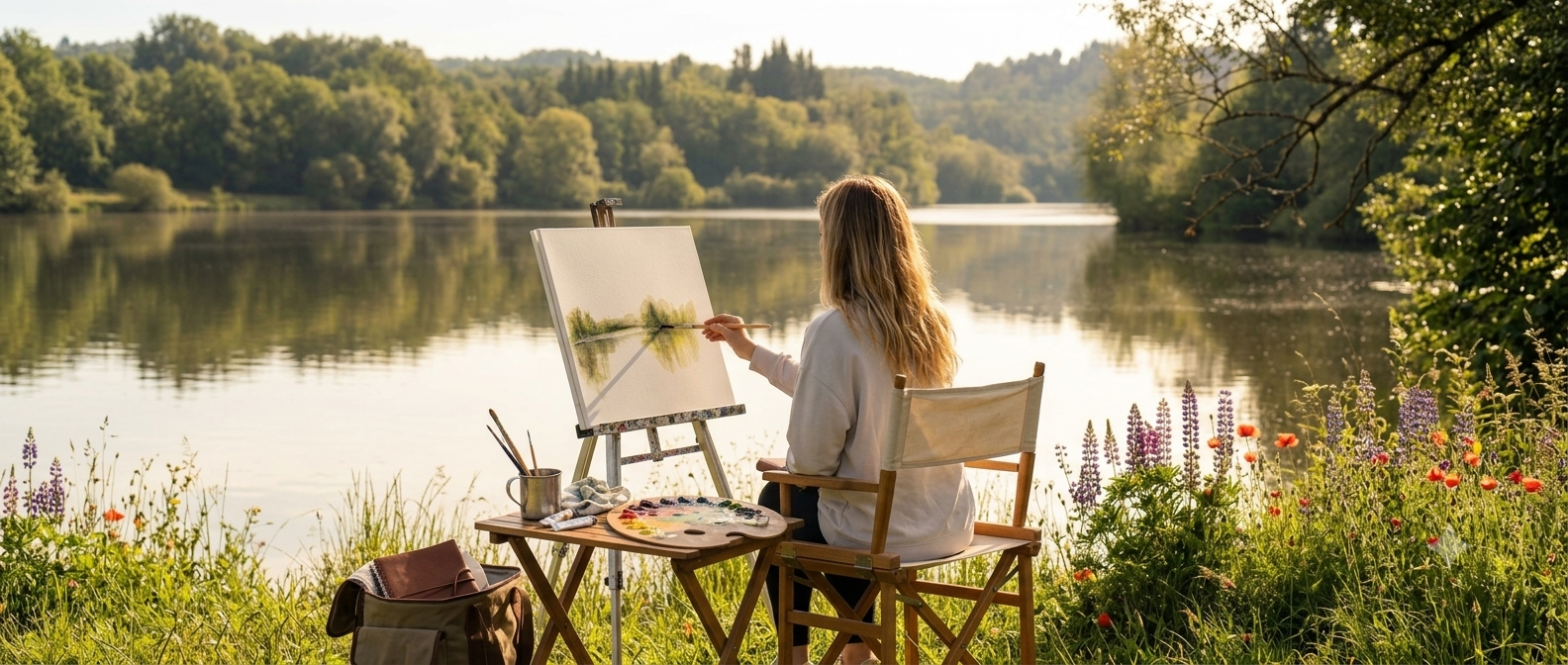
Because I watched how easily an unexamined life can become rigid, I realized early on that I didn’t need to copy someone else’s timeline or live by a pre-made design. I had to paint my own blank canvas, guided entirely by how I felt and what I was truly passionate about. This commitment to protecting my unique canvas is the reason I was never a girl who cared for social media. Even during my university freshman year, the last time I actively used it, I felt a deep disconnect.
It always made me a bit sad to watch my friends constantly look at public figures, desperately trying to clone someone else’s life and aesthetic, completely blind to the fact that they were already amazing just being themselves. Stepping completely away from social media has its pros and cons, but to me, it is the only way to protect my uniqueness and truly enjoy my existence. The empty canvas of our minds should be painted by our own genuine feelings, not stained by the constant, curated influence of strangers. In my head, that blank canvas has always existed, and as I age, I am finally starting to fill it with a rich variety of my own authentic colors.
Alongside that canvas, my childhood landscape was filled with massive mountains. Because I have loved long-distance marathons since I was young, my natural instinct was always to run straight toward a difficulty and tackle it through sheer endurance. I ran the marathon of being patient under the heavy pressure of my grandparents and parents. I ran the marathon of trying to decipher why my parents were so strict, attempting to understand my mom’s chaotic emotional dynamics. Eventually, I ran the marathon of people-pleasing, convincing myself that if I kept a perpetual smile on my face, I could make everyone else happy, and therefore force myself to feel happy too.
But I never learned how to stop running, and I had no idea how to take care of myself once the race was over. Every single time I crossed an emotional finish line or conquered a mountain, I crashed into a severe, paralyzing burnout. For months at a time, I would enter a state of utter exhaustion where I couldn’t initiate a single task. It was as if I had run a literal marathon but completely forgot to hydrate my body with water or nurture myself with nutritious food.
Learning how to take care of myself has been the steepest learning curve of my life. For the longest time, my brain simply couldn’t comprehend that it was okay for me to just be happy and relax. My shoulders were constantly stiff, permanently braced for impact, because I lived under the toxic logic that my life was fundamentally supposed to be tough, agonizing, and restrictive. Even when I started doubting this logic in my twenties, I didn’t know how to step off the track, so I just kept running.
When you are trapped in the thick of a difficult time, it is incredibly easy to feel a sense of hopelessness, to believe that you will never actually reach the place you want to get to. But that feeling is a lie. This season, too, shall pass. Whether an experience turns out in our favor or leaves us deeply uncomfortable, we inevitably extract something valuable from it. Every trial offers distinct life tips, showing us with absolute clarity what we excel at, what we love, and what we absolutely refuse to tolerate anymore.
All of it builds our perspective. It is as if we are constructing a massive chest of drawers within ourselves; each distinct experience, each raw emotion, each new person we meet, and each unfamiliar place we visit becomes a newly organized drawer filled with hidden strength and wisdom. When you finally step out of that dark phase and look back, you realize you didn’t just survive, you gained an entire library of profound insights that belong uniquely to you.
It is incredibly difficult to untangle these automated survival habits unless you actively revisit where they came from. If you are reading this and recognizing a deeply wired, unhealthy habit that you’ve been carrying without even realizing it, I want to say: I am so incredibly proud of you. Stepping onto the path of self-discovery requires an immense amount of raw courage, because it forces you to look inward and admit that the very logic that kept you alive as a child is the logic that is harming you as an adult. It takes rare bravery to realize that the rules you built to survive might actually be wrong for the person you want to become.
Today, I am giving myself permission to stand before my canvas with a relaxed mind and a soft body. The painting does not have to be perfect anymore. So, let me ask you:
What type of color do you want to invite into your life?
For me, whenever I feel my energy dipping, I intentionally make my physical surroundings vibrant. I surround myself with green plants, I give them names, I talk to them, and I tend to them. I look for color in the textures of the fabrics I wear, and most importantly, in the food I eat. Science confirms that a colorful plate naturally elevates our mood, and preparing a balanced meal filled with clean proteins, fibers, warm soups, and wholesome grains isn’t just about physical health; it’s an act of emotional self-respect.
Instead of wrapping yourself entirely in safe, muted blacks and whites, why not introduce a touch of vibrant color? If you love vegetables, paint a big white plate with the deep reds, bright yellows, and rich greens of nature, noticing how a colorful meal changes your mood before you even take a bite. If you enjoy flower arrangements, let different species and contrasting colors sit side by side, allowing each unique stem to shine in its own way in your surroundings.
Ultimately, no matter what we go through, when we approach our lives with a proper, healthy perspective, we can absolutely become exactly who we want to be. We deserve to claim that version of ourselves. For a long time, I felt like I could never reach that space. I felt chained to the belief that I had to conform to a specific mold, living up to who they wanted me to be based on what they thought was best for me. If you are reading this right now and feeling the urge to give up, I want to invite you to stop, step back, and treat yourself with absolute kindness and love, and extend that same grace to others. You are doing great. You will absolutely reach your destination, at your very own pace, surrounded by the full spectrum of vibrant colors you choose to paint onto your empty canvas.
This is the real reason why painting our empty canvas on our own terms is so vital. It is not about trying to desperately prove yourself to those who doubted or restricted you. It is simply about showing the world exactly who you are, as you are, in your full, unfiltered uniqueness. When you live authentically, people can see your true colors, your beautiful individuality, and your genuine passion. Paradoxically, seeing you finally thrive in your own light is what will bring real happiness to others, giving immense hope, joy, and love to everyone else around us. Let’s choose to step into our power, embrace our colors, and spread this love to the world.

Leave a Reply